Freezing your credit is a way to block most new accounts from being opened in your name while still using the credit you already have, and it’s generally worth doing whenever you’re worried about identity theft and aren’t in the middle of applying for new credit. In practice, that means you turn “open by default” into “closed by default,” then briefly thaw it when you need a loan, card, apartment, or phone plan.
What a credit freeze does
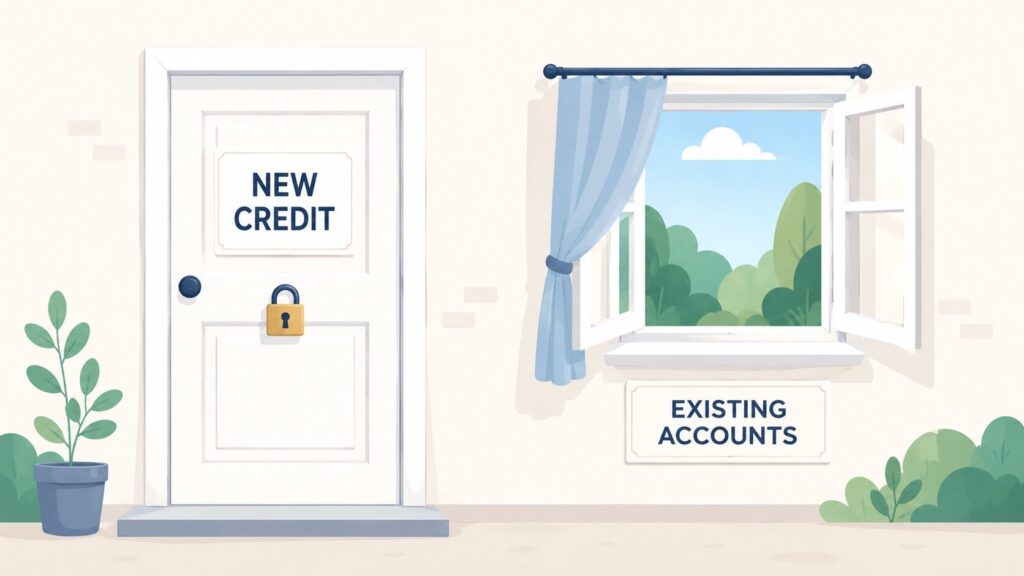
A credit freeze (also called a security freeze) tells the major credit bureaus not to let new lenders see your credit report. Because most lenders won’t approve a card, loan, or lease application without pulling your report, a freeze effectively stops new accounts—legitimate or fraudulent—until you lift it.consumer.
A freeze does not lock your bank accounts, cancel existing cards, or stop you from using credit lines you already have. Your current creditors, some government agencies, and any credit monitoring service you use can still access your file, but strangers trying to open something new in your name cannot. A freeze also doesn’t hurt your credit score and doesn’t stop you from checking your own credit report.
Think of it this way: you’re locking the door to new credit, not the rooms you already live in. Action: If your main fear is someone opening new accounts in your name, plan on using a credit freeze.
When you should freeze (and when you can wait)
Strong reasons to freeze now:
- A confirmed data breach involving key identifiers like your Social Security number (for example, a hospital, insurer, or retailer telling you your SSN was exposed).
- A stolen wallet, tax documents, or other paperwork with your SSN and date of birth.consumer.
- Signs someone is already trying to open accounts in your name—collection calls you don’t recognize, new accounts on your report, or fraud alerts from monitoring tools.
- You simply want your default to be “no new credit unless I say so,” even if you haven’t seen fraud yet.consumer.
In those situations, a freeze is one of the strongest protections you can put in place, and in the US it’s free to place and lift.consumer.
Situational or “maybe wait” reasons:
- A low‑risk leak, like a retailer announcing email/password exposure with no SSN or financial data. (Changing passwords and enabling two‑factor authentication may be enough.)
- You know you’ll be applying for a mortgage, auto loan, or new card in the next few weeks; freezing now just means more thawing logistics.consumer.
- You apply for new credit very frequently (for points or business reasons) and don’t want the extra step each time.
Outside the US, the picture is mixed. In the UK, there isn’t a US‑style universal freeze, but you can use Cifas Protective Registration, which adds a fraud‑risk marker and forces lenders to take extra steps to verify you before approving credit. In Canada, Equifax and TransUnion offer security freezes or locks, but they are currently full-featured mainly for Quebec residents and will roll out in Ontario in 2026, with other provinces using fraud alerts and similar tools. In India, major bureaus like CIBIL and Experian let you request a form of credit freeze or access lock, but you must contact each bureau separately and follow its process.
Action: If any strong reason applies and you’re not about to apply for new credit, place a freeze; if you have only a minor leak and big applications coming soon, schedule the freeze right after those applications.
Freeze vs fraud alert vs monitoring
All three tools live on the same credit system but do different jobs.
Quick comparison
| Tool | What it does | Who controls it | Typical cost |
|---|---|---|---|
| Credit freeze | Blocks most new lenders from seeing your report, stopping new accounts. | You decide when to freeze or lift. consumer. | Free in US; often free elsewhere. consumer. |
| Fraud alert | Tells lenders to take extra steps (like calling you) before approving credit. consumer. | You request the alert; it then auto‑propagates to other bureaus in the US. consumer. | Free. consumer. |
| Credit monitoring | Watches your reports/scores and notifies you of changes (new accounts, inquiries, address changes). | You sign up; service pings you when something happens. | Free to paid subscriptions, often up to around $30/month. |
A freeze is proactive—fraudsters can’t easily open new credit because lenders can’t see your file. A fraud alert is a speed bump—applications can still go through, but lenders are supposed to verify that it’s really you first. Monitoring is reactive—it tells you after something changes so you can respond quickly, but it doesn’t block anything by itself.
Action: Use a freeze as your base lock if you’re worried about new accounts; add fraud alerts and monitoring as extra layers, but don’t rely on monitoring alone.
How to place a freeze (US)
In the US, you place a freeze with each of the three nationwide credit bureaus: Equifax, Experian, and TransUnion. Freezing at just one bureau doesn’t fully protect you, because lenders can pull your file from any of them.
Step‑by‑step for the big three
- Gather your information. You’ll need your full name, date of birth, Social Security number, current address, and sometimes prior addresses; some bureaus may also request copies of ID or utility bills, especially if you apply by mail.lifelock.
- Go to each bureau’s freeze page or call.
- Equifax: Offers free online, phone, and mail freezing via its “credit freeze” or myEquifax portal.
- Experian: Has an online freeze center and phone/mail options.lifelock.
- TransUnion: Provides an online Service Center, plus phone and mail options, all free.
- Create or log into your account. Most bureaus will have you set up an online login and answer identity‑verification questions.
- Request the freeze. Select “place a security freeze/credit freeze,” complete any prompts, and submit. Online or phone requests must be applied within one business day (often immediately); mail can take up to three business days.
- Store your PIN or password. Each bureau will send you a PIN, password, or confirmation you’ll need to lift the freeze later. Keep those details somewhere secure but easy to find—password manager, safe, or a clearly labeled note.lifelock.
Freezes on US credit reports are free to place, lift temporarily, and remove permanently under current federal law and bureau policies. Always double‑check the latest instructions and terms on each bureau’s site, because forms and portal layouts do change.
Optional: freeze your banking file (ChexSystems)
Banks and credit unions often consult a separate reporting system, ChexSystems, when you open checking or savings accounts. Placing a ChexSystems security freeze stops institutions from pulling that file to approve new deposit accounts in your name, which can prevent fraudulent bank accounts being opened.
To freeze with ChexSystems, you typically create an online Consumer Portal account, verify your identity, and choose “Security Freeze,” or you can request a freeze by phone or mail. As with credit bureaus, you’ll receive a PIN that you need for temporary lifts and removals.
Action: Set aside 20–30 minutes to place freezes at Equifax, Experian, TransUnion—and ChexSystems if you want to protect bank accounts—then store your PINs and logins together.
Living with a freeze without hassle
Day‑to‑day, most of your financial life continues unchanged with a freeze in place. You can still use your existing credit cards, lines of credit, and bank accounts normally. Your credit score is unaffected, and you can still request your own credit reports and scores.
Where you’ll notice the freeze is when anything requires new credit or a hard pull:
- Applying for a new credit card or personal loan. The lender will likely get an error or “file frozen” message and can’t approve until your freeze is lifted.
- Financing a car, taking out a mortgage, or getting a student loan. All usually involve pulling your report first.consumer.
- Renting an apartment or signing up for certain phone plans or utilities that run credit checks.consumer.
Existing creditors, some government agencies, and credit monitoring services can still see your file for account management, collections, or regulatory reasons, even while frozen. If you forget you froze your credit, the worst‑case scenario is usually that an application is delayed or denied until you thaw and try again.
Action: Assume everyday use of existing credit is fine; just plan on lifting your freeze whenever you know a new application or screening is coming.
Unfreezing the right way
You control when and how your freeze is lifted. A freeze lasts until you remove it; it doesn’t expire on its own.
Temporary lift vs. permanent removal
- Temporary lift (thaw): Lets lenders access your file for a set period (for example, a week while you shop for a car), after which the freeze automatically snaps back.
- Permanent removal: Ends the freeze entirely, leaving your file open until you choose to place a new one.
Practically, you’ll almost always use a temporary lift; it gives you what you need for a burst of applications while keeping long‑term protection.consumer.
How to lift a freeze
For US credit bureaus, you can lift online, by phone, or by mail:
- Online or phone lifts must take effect within about one hour; mail can take up to three business days.
- You’ll log in or provide your PIN/password, choose either “temporarily lift” or “remove,” and optionally specify dates or a specific lender.consumer.
For ChexSystems, you log into the Consumer Portal, enter your PIN, and choose to remove or temporarily lift the freeze for either a date range or a specific institution; similar options exist by phone or mail.
If you’ve lost your PIN or login, bureaus and ChexSystems provide ways to request a replacement, but it can involve extra identity checks and take more time.
Timing tip: Start a temporary lift a couple of days before you expect rate shopping or a mortgage/auto approval burst, so all lenders can pull your file without hiccups.
Action: Before any planned round of applications, log in and schedule a temporary lift for a window that covers them, then let the freeze automatically return.
A simple personal rule
A straightforward rule that works for most people:
Keep your credit frozen whenever you’re not actively applying for new credit; thaw it only when you have a real application coming.
This turns the freeze from an emergency measure into your quiet default: locked most of the time, briefly open when you decide to invite a lender in.consumer.
Explaining it to a parent or partner can be as simple as: “We’re putting a lock on our credit reports. It doesn’t change our current cards or accounts, but it makes it much harder for anyone to open new credit in our names. When we want a loan or card, we’ll unlock it for a week and then lock it again.”consumer.
Action: Adopt “freeze by default, thaw on purpose” as your household rule, especially after any breach or suspicious activity.
FAQs
If I freeze my credit, can I still use my current credit cards?
Yes. A freeze stops new accounts from being opened but doesn’t block you from using existing credit cards and lines of credit or paying your bills. Your current card issuers can still see your file for account management and risk checks.
Do I have to freeze with all three bureaus or is one enough?
You should freeze with all three major bureaus—Equifax, Experian, and TransUnion—because lenders can use any of them, and a freeze at one does not automatically carry over to the others. The process and cost are similar, and US law makes freezes free at each.
Will a freeze hurt my credit score?
No. A credit freeze doesn’t change your score or count as negative behavior. It only restricts who can access your report for new credit decisions.
I might apply for a car loan in a few months — should I wait to freeze?
If you’re already dealing with a breach or suspicious activity, it’s better to freeze now and plan a temporary lift when you’re closer to applying. If your situation is calm and you’re rate‑shopping soon, you can reasonably wait, but have a plan to freeze right after the loan is finalized.consumer.
What’s the difference between a freeze and a fraud alert?
A freeze blocks most new lenders from accessing your report at all, stopping new accounts until you lift it. A fraud alert leaves your report accessible but tells lenders to take extra steps—like calling you—to verify your identity before approving credit. Alerts are easier and temporary; freezes are stronger and last until you remove them.
Is this free or are they going to charge me?
In the US, placing, temporarily lifting, and permanently removing a credit freeze with Equifax, Experian, TransUnion, and ChexSystems is free under federal law and current bureau policies. In other countries, freezes or equivalent protections may be free or low‑cost; for example, many Canadian bureaus offer free freezes, while UK Cifas Protective Registration charges a modest fee for two years.
What if I lose the PIN they give me?
Don’t panic; contact the bureau or ChexSystems and follow their process to request a replacement PIN or reset your login, which will involve identity verification and can take some time. This is why password managers or a dedicated, secure note for “freeze PINs” are so helpful.
I don’t live in the US — is there an equivalent where I am?
- UK: There is no US‑style full freeze, but Cifas Protective Registration adds a marker to your file that forces extra checks before credit is granted.
- Canada: Equifax and TransUnion offer security freezes/locks, currently fully available in Quebec and rolling out to Ontario and other provinces, plus fraud alerts in many areas.
- India: Bureaus like CIBIL, Experian, Equifax, and CRIF High Mark support report freezes or locks, but you must request them separately from each bureau.
Action: Wherever you live, search for “credit freeze,” “security freeze,” or fraud alerts with your local bureaus or regulators, and aim for the option that either locks your file or forces extra verification before new credit is approved.